OVERVIEW
Daniel 11 stands as the most detailed predictive prophecy in all of Scripture. Written approximately 536 BC during the third year of Cyrus king of Persia (Daniel 10:1), this chapter contains 135 specific prophecies fulfilled with pinpoint accuracy over a span of 375 years (539-164 BC). Every verse from Daniel 11:2 through 11:35 has been verified by secular historians.
The prophecy was so precise that the pagan philosopher Porphyry (234-305 AD) argued Daniel must have been written after the events. However, the Dead Sea Scrolls (discovered 1947) contain copies of Daniel dating well before many of the fulfilled events, and the Septuagint Pentateuch translation (c. 250 BC) demonstrates the Jewish canon was being translated into Greek well before the Maccabean period. The Daniel scroll fragments found at Qumran (2nd century BC copies) confirm the text was already in wide circulation.
THE PERSIAN KINGS (DANIEL 11:2)

Rock relief at Mount Behistun, Iran (c. 520 BC). Darius I stands with his foot on the pretender Gaumata, with bound captive kings before him. Inscribed in Old Persian, Babylonian, and Elamite -- the "Rosetta Stone" of cuneiform decipherment. This trilingual inscription confirms the Persian king lists exactly as Daniel records them.

The angel reveals four Persian kings who would follow Cyrus the Great. Each has been identified by secular historians:
THE FOUR KINGS AFTER CYRUS
| King | Reign | Significance | Status |
|---|---|---|---|
| Cambyses II | 530-522 BC | Conquered Egypt; son of Cyrus | FULFILLED |
| Smerdis / Bardiya | 522 BC | Impostor who seized throne briefly; possibly Gaumata the Magian | FULFILLED |
| Darius I Hystaspes | 522-486 BC | Empire at its height; authorized Temple completion (Ezra 6) | FULFILLED |
| Xerxes I (Ahasuerus) | 486-465 BC | "The fourth shall be far richer... stir up all against Greece" | FULFILLED |

Stone relief from the Hadish Palace at Persepolis showing Xerxes I in royal garb. He assembled the largest army the ancient world had seen to invade Greece -- fulfilling Daniel's prophecy that the fourth king would "stir up all against the realm of Grecia."
Xerxes I -- The Richest King
Xerxes I was indeed "far richer than they all." Herodotus records that he assembled the largest army the ancient world had ever seen -- over 2 million men (likely exaggerated, modern estimates: 300,000-500,000) -- and invaded Greece in 480 BC. This campaign included:
- Battle of Thermopylae (480 BC) -- 300 Spartans under Leonidas held the pass against the massive Persian force
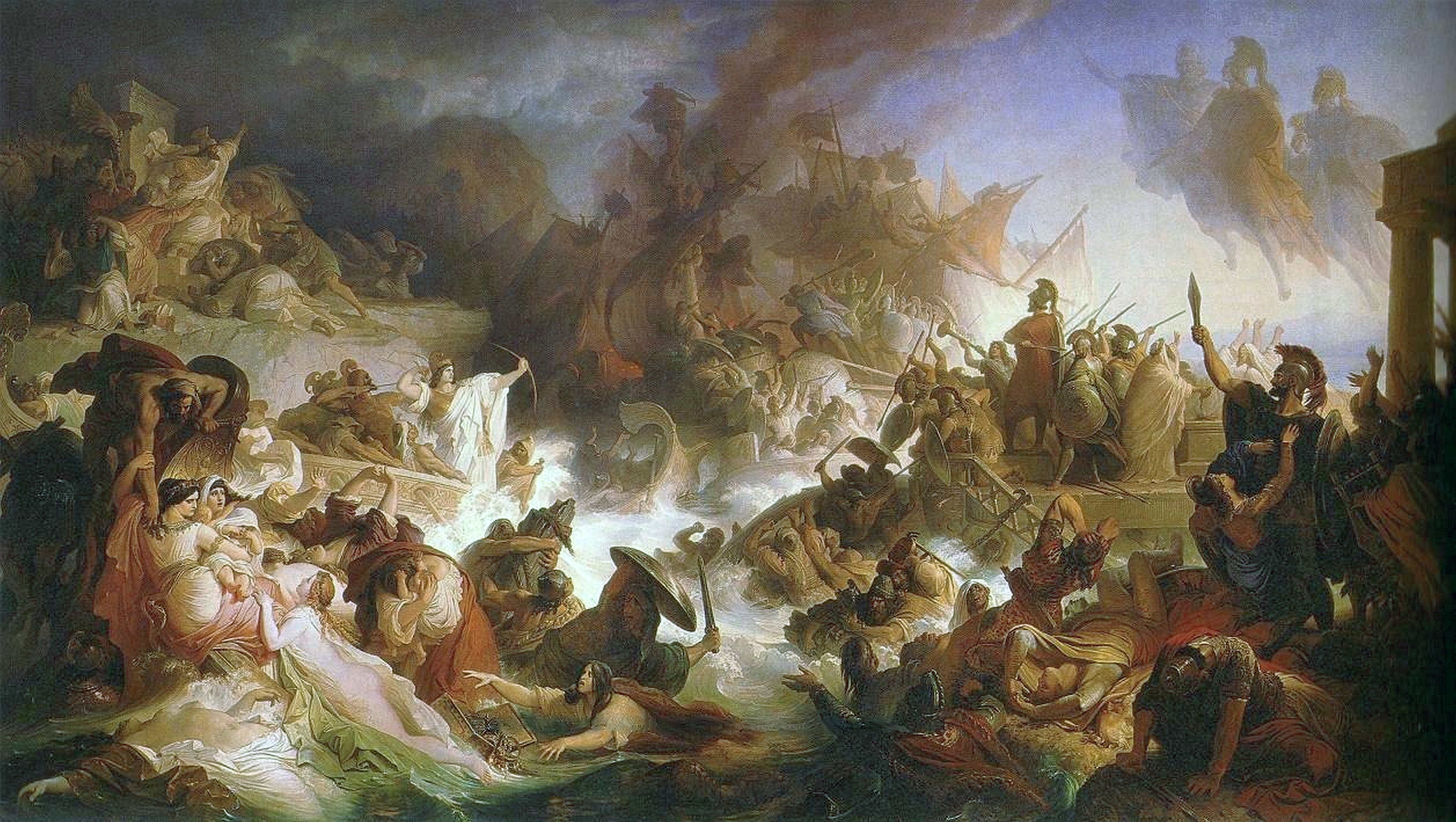
- Battle of Salamis (480 BC) -- Greek navy under Themistocles destroyed the Persian fleet -- the turning point
- Battle of Plataea (479 BC) -- Final Greek victory that ended the Persian invasion
Xerxes "stirred up all against the realm of Greece" exactly as prophesied. His defeat planted the seeds of Greek desire for revenge -- which Alexander would fulfill 150 years later.



THE MIGHTY KING (DANIEL 11:3-4)

ALEXANDER THE GREAT
Prophecy Fulfilled Point by Point

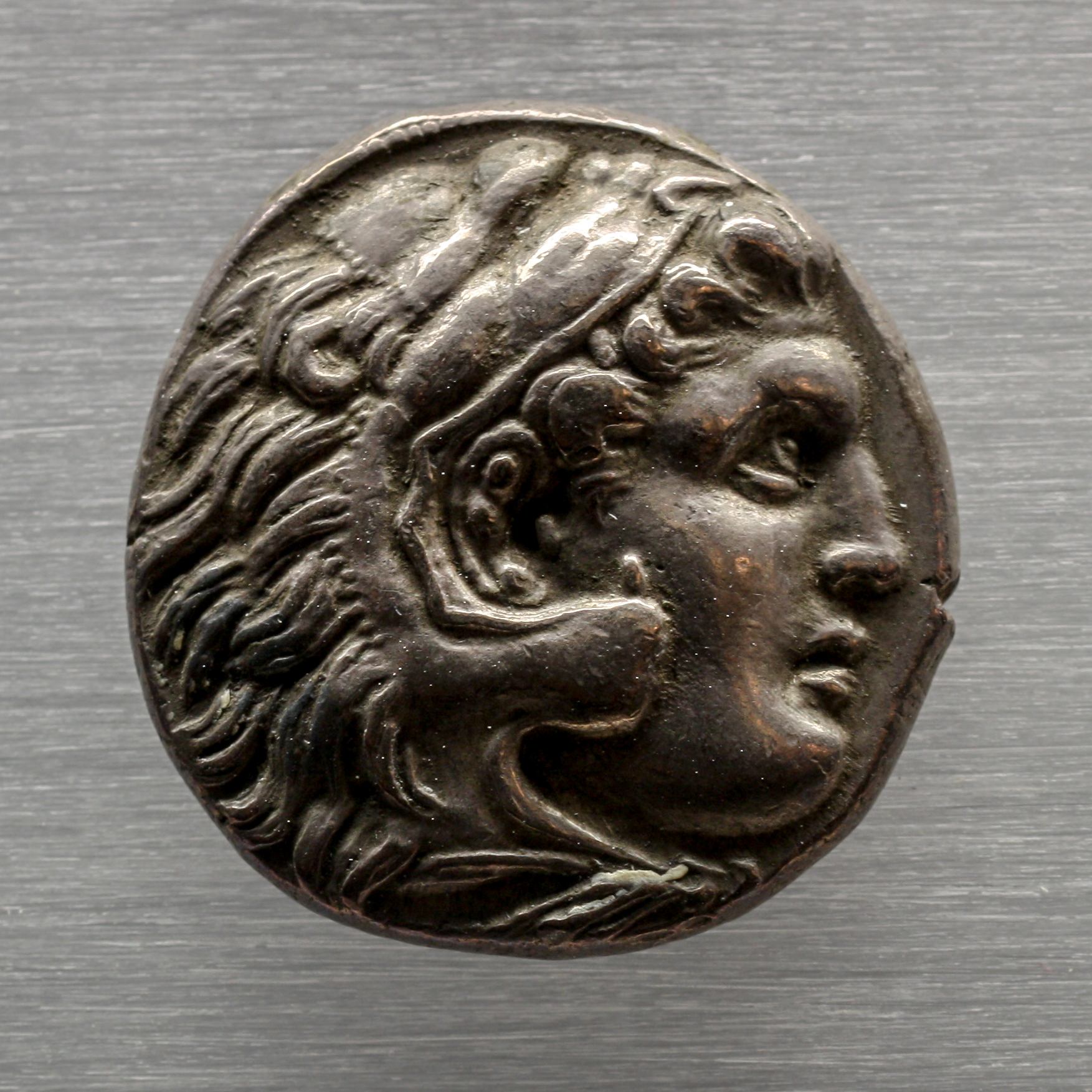
COINS OF THE SUCCESSORS



KINGS OF THE SOUTH vs KINGS OF THE NORTH (DANIEL 11:5-20)
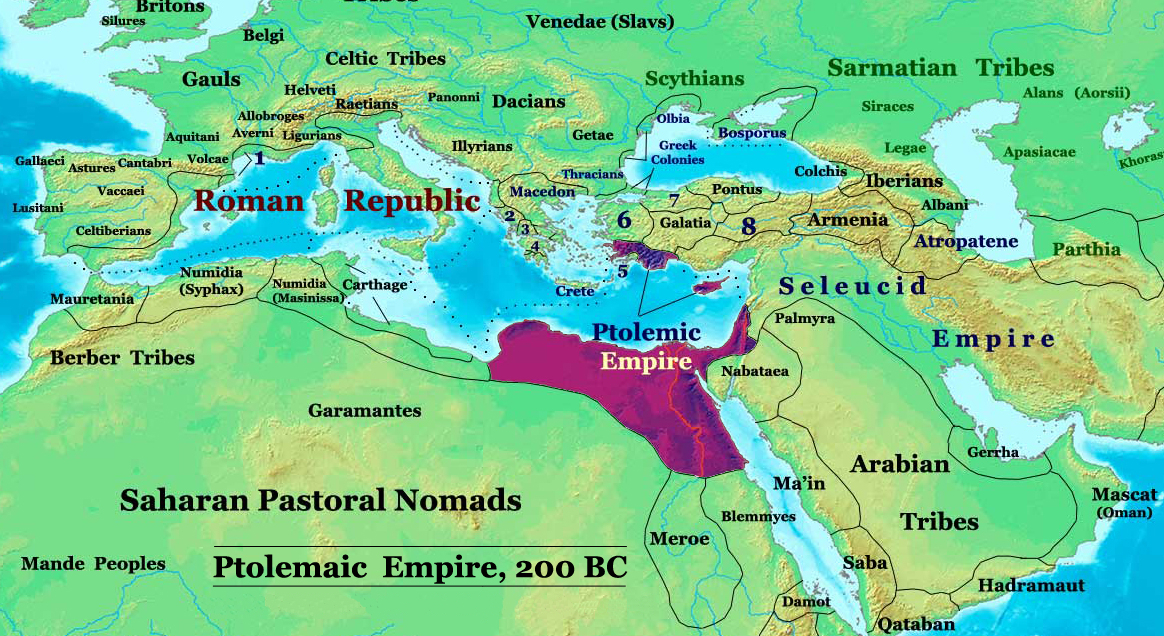
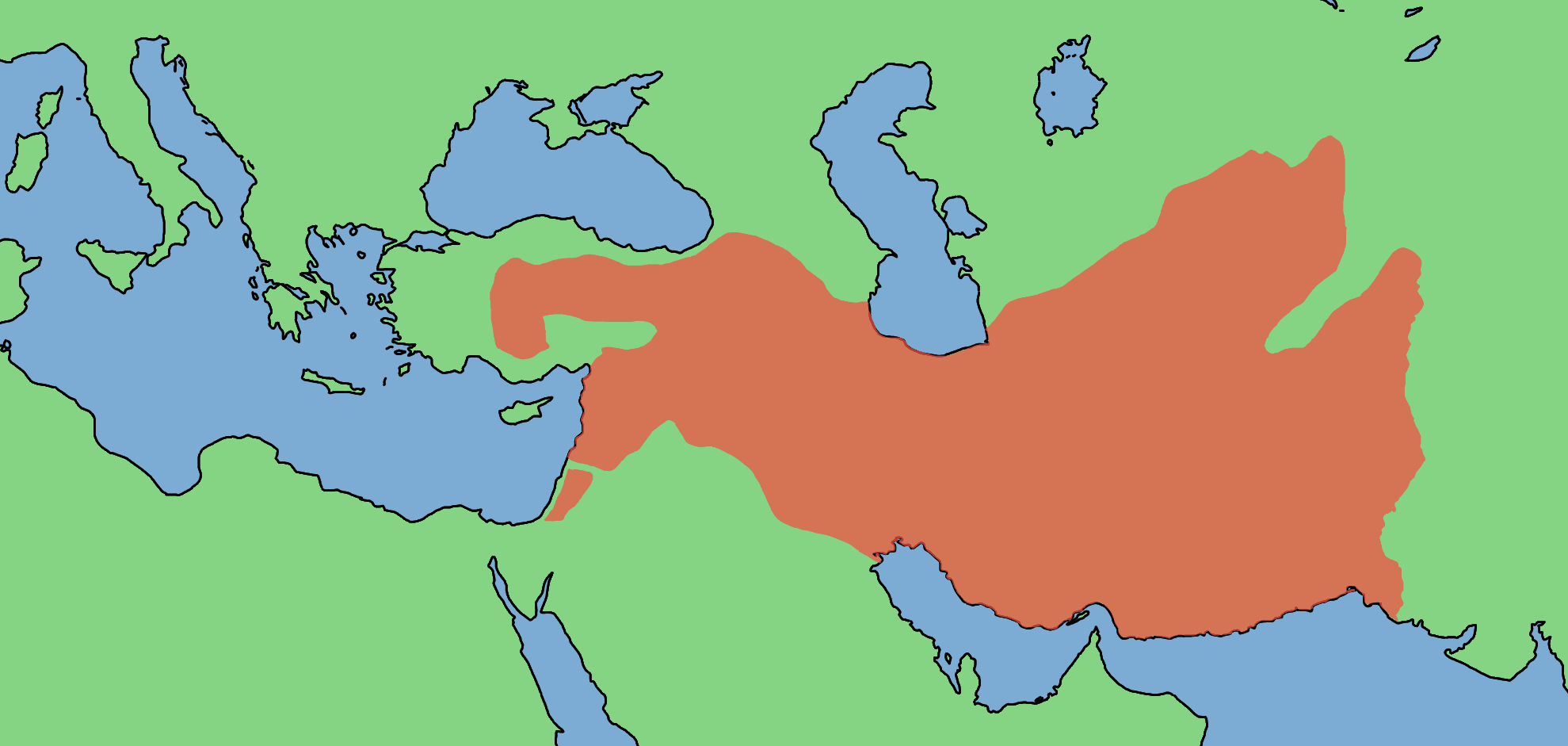
After Alexander's death, the two successor kingdoms most relevant to Israel were the Ptolemaic Kingdom of Egypt (King of the South) and the Seleucid Empire of Syria (King of the North). Israel -- "the glorious land" -- sat directly between them, fought over for centuries.

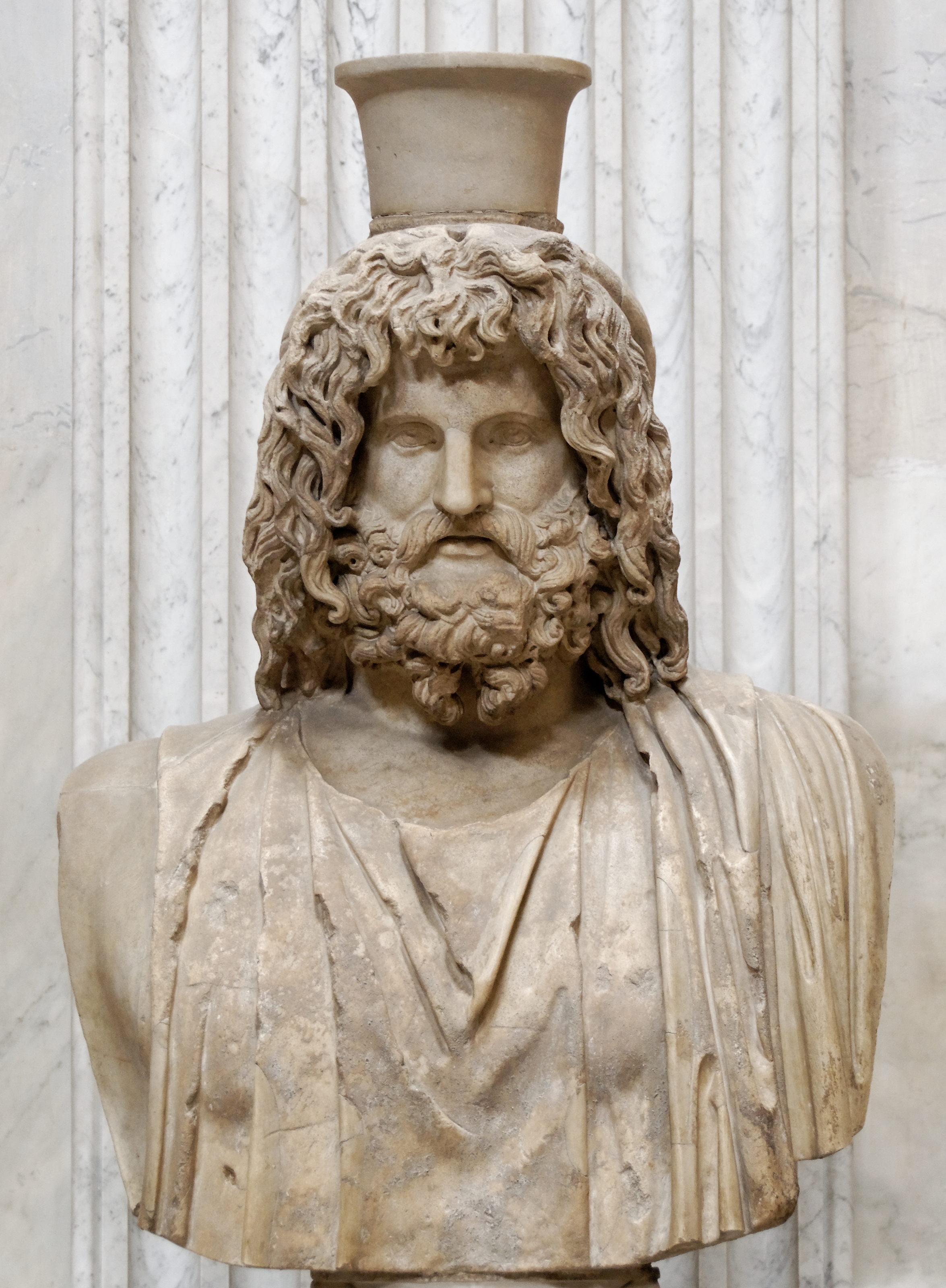
Marble bust of Serapis wearing the modius (grain basket). Museo Pio-Clementino, Vatican. Serapis was a syncretic deity created by Ptolemy I Soter to unite Greek and Egyptian religion -- combining Osiris, Apis, Zeus, and Hades. This religious syncretism foreshadows the later forced Hellenization that Antiochus IV would impose on Israel.
WHY THIS MATTERS
Israel is always at the center of biblical prophecy. The "King of the South" and "King of the North" are defined relative to Jerusalem. Egypt lies to the south; Syria/Mesopotamia to the north. Every conflict described in Daniel 11 directly impacted the Jewish people caught between these two powers.


Verse-by-Verse Fulfillment
DANIEL 11:5 -- THE FIRST KINGS
DANIEL 11:6 -- THE MARRIAGE ALLIANCE

Ptolemy II Philadelphus gave his daughter Berenice in marriage to Antiochus II Theos (c. 252 BC) to forge a peace treaty. Antiochus divorced his first wife Laodice to marry Berenice. But after Ptolemy II died, Antiochus returned to Laodice -- who promptly poisoned Antiochus, murdered Berenice, and killed their infant son. Every detail fulfilled: "she shall not retain the power" -- "neither shall he stand" -- "she shall be given up."
DANIEL 11:7-9 -- VENGEANCE FROM THE SOUTH
Ptolemy III Euergetes (246-222 BC), Berenice's brother ("a branch of her roots"), launched a massive invasion to avenge his sister's murder. He invaded the Seleucid Empire under Seleucus II Callinicus, captured the capital Antioch, and plundered vast treasures -- including idols the Persians had originally stolen from Egypt. He returned with 4,000 talents of gold, 40,000 talents of silver, and 2,500 sacred statues (according to the Adulis Inscription). The Egyptians called him "Euergetes" (benefactor) for recovering their gods.
DANIEL 11:10-12 -- ANTIOCHUS III vs PTOLEMY IV


Antiochus III "the Great" (223-187 BC) assembled a massive army and invaded southward. At the Battle of Raphia (217 BC), Ptolemy IV Philopator roused himself from indolence ("moved with choler"), defeated Antiochus despite being outnumbered, and slaughtered tens of thousands. But Ptolemy IV squandered the victory -- "he shall not be strengthened by it" -- returning to his dissolute lifestyle instead of pressing the advantage.
DANIEL 11:13-16 -- ANTIOCHUS III RETURNS
Years later, Antiochus III returned with an even larger army. At the Battle of Panium (200 BC) near the headwaters of the Jordan River, he decisively defeated the Egyptian general Scopas and the young Ptolemy V Epiphanes. This victory gave Antiochus control of "the glorious land" -- Israel -- transferring it from Ptolemaic to Seleucid control for the first time. Jewish renegades aided Antiochus (v14: "the robbers of thy people shall exalt themselves").
DANIEL 11:17 -- THE FAILED MARRIAGE SCHEME
Antiochus III gave his daughter Cleopatra I Syra to Ptolemy V in marriage (194 BC), hoping she would act as his agent in Egypt. But Cleopatra sided with her husband against her own father -- "she shall not stand on his side, neither be for him." The plan failed completely.
DANIEL 11:18-19 -- THE FALL OF ANTIOCHUS III

Antiochus III turned to the "coastlands" -- attacking Greek islands and Asia Minor. But the Roman general Lucius Cornelius Scipio (Scipio Asiaticus), brother of Scipio Africanus, crushed him at the Battle of Magnesia (190 BC). This "prince" caused the reproach to "turn upon him" -- Antiochus was forced to pay massive reparations and surrender territory. He retreated to his own territory and died shortly after (187 BC) while attempting to plunder a temple of Bel in Elymais -- "he shall stumble and fall, and not be found."
DANIEL 11:20 -- THE TAX COLLECTOR

Seleucus IV Philopator succeeded his father Antiochus III. Burdened with the massive war reparations owed to Rome, he became a "raiser of taxes." He sent his treasurer Heliodorus to plunder the Jerusalem Temple treasury (2 Maccabees 3). Heliodorus then assassinated Seleucus by poisoning in 175 BC -- "destroyed, neither in anger, nor in battle." Every word fulfilled.
THE VILE PERSON -- ANTIOCHUS IV EPIPHANES (DANIEL 11:21-35)

Antiochus IV Epiphanes (175-164 BC) seized the Seleucid throne through intrigue after the assassination of his brother Seleucus IV. He was not the rightful heir -- "they shall not give the honour of the kingdom" -- but manipulated his way into power through "flatteries." His self-chosen title "Epiphanes" means "God Manifest"; his enemies called him "Epimanes" -- "the Madman."
RISE TO POWER (Daniel 11:21-24)
Antiochus IV consolidated power through a combination of flattery, bribery, and military force. He deposed the legitimate High Priest Onias III and sold the office to the highest bidder -- first Jason, then Menelaus. He distributed plunder lavishly to secure loyalty (v24: "he shall scatter among them the prey, and spoil, and riches"), something none of his predecessors had done.
WARS WITH EGYPT (Daniel 11:25-30)
First Campaign -- Near Pelusium (169 BC)
Antiochus invaded Egypt and defeated Ptolemy VI Philometor near Pelusium (169 BC). Ptolemy VI's own advisors betrayed him ("they shall forecast devices against him"). The two kings sat at the same table, each lying to the other (v27: "both these kings' hearts shall be to do mischief, and they shall speak lies at one table").
Second Campaign -- The Day of Eleusis (168 BC)
Antiochus invaded Egypt a second time, but this time the Roman envoy Gaius Popillius Laenas confronted him at Eleusis, near Alexandria. Popillius delivered the Roman Senate's ultimatum to withdraw, and when Antiochus asked for time to consider, Popillius drew a circle in the sand around Antiochus and demanded an answer before he stepped out. Humiliated, Antiochus withdrew -- "the ships of Chittim" (Rome) had stopped him cold.
THE DAY OF ELEUSIS -- 168 BC
This moment is one of the most dramatic in ancient history. A single Roman senator, with no army behind him, stopped the most powerful Seleucid king in his tracks with nothing but a circle drawn in the sand and the threat of Roman power. Antiochus, humiliated and enraged, redirected his fury toward Jerusalem.
THE ABOMINATION OF DESOLATION (Daniel 11:30-31)
Returning from his humiliation in Egypt, Antiochus turned his rage against Jerusalem. On Kislev 15, 167 BC (December), his forces:


- Abolished the daily sacrifice -- the twice-daily tamid offering ceased
- Erected a statue of Zeus Olympios in the Temple -- the "abomination of desolation"
- Sacrificed a pig on the altar of burnt offering
- Banned Torah observance -- circumcision, Sabbath, and feast days were forbidden on pain of death
- Burned copies of the Torah
- Slaughtered those who resisted -- mothers who circumcised their sons were killed with their infants hung around their necks (1 Maccabees 1:60-61)

Jesus referenced this event as a type of what the future Antichrist would do: "When ye therefore shall see the abomination of desolation, spoken of by Daniel the prophet, stand in the holy place..." (Matthew 24:15).
THE MACCABEAN REVOLT (Daniel 11:32-35)

The revolt began when the elderly priest Mattathias of Modi'in refused to offer a pagan sacrifice and killed both the king's officer and a compliant Jew. He and his five sons fled to the hills and launched a guerrilla war. After Mattathias died, his son Judas Maccabeus ("The Hammer") became the military leader.

Key Battles
| Battle | Date | Result | Significance |
|---|---|---|---|
| Beth Horon | 166 BC | Maccabean Victory | Defeated Seron's Seleucid army in a mountain ambush |
| Emmaus | 166 BC | Maccabean Victory | Judas defeated a larger Seleucid force under Gorgias with a surprise attack |
| Beth Zur | 164 BC | Maccabean Victory | Defeated Lysias, opening the road to Jerusalem |
HANUKKAH -- The Temple Rededicated
On Kislev 25, 164 BC (December 25), exactly three years after the desecration, Judas Maccabeus rededicated the Temple. The altar of Zeus was torn down, a new altar built, and the daily sacrifice restored. This event is celebrated as Hanukkah -- the Festival of Dedication.
Jesus Himself observed Hanukkah, walking in the Temple during this very feast. He used the occasion to declare: "I and my Father are one" (John 10:30).

THE WILLFUL KING -- TRANSITION TO ANTICHRIST (DANIEL 11:36-45)
TYPE / ANTITYPE SHIFT
At Daniel 11:36, the prophecy transitions from the historical Antiochus IV Epiphanes to the future Antichrist. Antiochus was the historical type; the Antichrist is the ultimate antitype. The language moves beyond what Antiochus did into descriptions that only fit an end-times figure. Jesus confirmed this when He spoke of the "abomination of desolation" as still future (Matthew 24:15), even though Antiochus had already committed his desecration 200 years earlier.
CHARACTERISTICS OF THE WILLFUL KING
| Verse | Prophecy | Cross-Reference |
|---|---|---|
| v36 | "Exalt himself above every god" -- claims divine authority over all religions | 2 Thessalonians 2:3-4 -- "exalteth himself above all that is called God" |
| v37 | "Neither shall he regard the God of his fathers" -- rejects traditional religion | May indicate Jewish or Christian heritage abandoned |
| v37 | "Nor the desire of women" -- variously interpreted as rejecting the Messiah (the desire of Jewish women to bear Him), or celibacy/asexuality | Unique characteristic for identification |
| v38 | "But in his estate shall he honour the god of forces" (Hebrew: elohim mauzzim -- god of fortresses/strongholds) | Military power becomes his religion; worship of raw power |
| v39 | "He shall cause them to rule over many, and shall divide the land for gain" | Redistributes territory as political reward |
THE END-TIMES CONFLICT (Daniel 11:40-45)
Campaign Sequence
- v40 -- King of the South (Egypt/African coalition?) and King of the North attack the Antichrist simultaneously
- v41 -- Antichrist counterattacks, enters "the glorious land" (Israel) -- but Edom, Moab, and Ammon escape (modern Jordan) -- perhaps because this is where Jewish remnant flees (Matthew 24:16, Revelation 12:6, possibly Petra)
- v42-43 -- Conquers Egypt, gains control of "treasures of gold and silver" -- Libyans and Ethiopians follow him
- v44 -- "Tidings out of the east and out of the north shall trouble him" -- a threat from the east (Revelation 16:12 -- kings of the east crossing the Euphrates?) and from the north
- v45 -- "He shall plant the tabernacles of his palace between the seas" -- between the Mediterranean and Dead Sea = Jerusalem
- v45 -- "Yet he shall come to his end, and none shall help him" -- total destruction with no ally to save him (Revelation 19:20)
DANIEL 12 -- THE TIME OF THE END
MICHAEL STANDS UP (Daniel 12:1)
Michael the archangel -- the angelic protector of Israel -- rises to action. The "time of trouble such as never was" is the Great Tribulation, confirmed by Jesus: "For then shall be great tribulation, such as was not since the beginning of the world to this time, no, nor ever shall be" (Matthew 24:21). The identical language proves Jesus was referencing Daniel 12:1 directly.
THE RESURRECTION (Daniel 12:2)
This is the most explicit Old Testament passage on bodily resurrection. It describes a dual resurrection -- the righteous to everlasting life, the wicked to everlasting contempt. Jesus confirmed and expanded this teaching:
SEAL THE BOOK (Daniel 12:4)
"Many shall run to and fro" -- the Hebrew yeshotetu implies frantic searching, rapid movement across the earth. "Knowledge shall be increased" -- the Hebrew da'at (knowledge) shall rabah (multiply, increase greatly). We live in the era of exponential information growth. More information was created in the last two years than in all of prior human history. The book Daniel was told to seal is being unsealed in our generation.
THE THREE TIME PERIODS (Daniel 12:7, 11-12)
THREE PROPHETIC TIME PERIODS
The 1,260 days = 42 months = 3.5 years = the second half of Daniel's 70th Week, when the Antichrist breaks his covenant and persecutes Israel (Daniel 9:27, Revelation 12:6, 13:5).
The additional 30 days (to 1,290) likely covers the cleansing and restoration of the Temple and the land after the Tribulation, parallel to the original Temple rededication.
The additional 45 days (to 1,335) likely covers the judgment of the nations -- the "Sheep and Goats" judgment of Matthew 25:31-46, where Christ separates the nations based on how they treated "the least of these my brethren" (Israel) during the Tribulation.
Those who endure to the 1,335th day enter the Millennial Kingdom -- the reign of Christ on earth.
DANIEL'S PERSONAL PROMISE (Daniel 12:13)
The angel's final words to Daniel are deeply personal. After revealing centuries of war, persecution, and tribulation, God assures Daniel: you will rest (in death), and you will rise (in resurrection) to receive your inheritance ("thy lot") at the end of the days. Daniel would see the fulfillment of everything he recorded.
TYPE & ANTITYPE -- ANTIOCHUS IV vs FUTURE ANTICHRIST
Antiochus IV Epiphanes serves as the historical type -- a preview -- of the future Antichrist. The parallels are striking, but the Antichrist exceeds Antiochus in every dimension:
| Characteristic | Antiochus IV (Type) | Antichrist (Antitype) |
|---|---|---|
| Rise to power | Seized throne by flattery and intrigue (Daniel 11:21) | Rises through deception and false peace (Daniel 9:27, Rev 6:2) |
| Self-exaltation | "Epiphanes" -- God Manifest (on his coins) | "Exalteth himself above all that is called God" (2 Thess 2:4) |
| Temple desecration | Zeus statue in Temple, pig sacrifice (167 BC) | Sits in the Temple declaring himself God (2 Thess 2:4, Matt 24:15) |
| Abolished daily sacrifice | Ended the tamid offering for ~3 years | Ends sacrifice midway through the 70th Week (Daniel 9:27) |
| Persecution of Jews | Banned Torah, killed resisters (1 Macc 1:41-64) | Persecutes Israel for 3.5 years -- "time of Jacob's trouble" (Jer 30:7) |
| Duration | ~3 years of desecration (167-164 BC) | Exactly 3.5 years / 1,260 days (Daniel 7:25, Rev 13:5) |
| Scope | Regional -- Seleucid Empire and Israel | Global -- "power over all kindreds, tongues, nations" (Rev 13:7) |
| Defeat | Died of disease during a campaign (164 BC) | Destroyed by Christ at His Second Coming (Rev 19:20, 2 Thess 2:8) |
| Aftermath | Temple rededicated -- Hanukkah | Temple cleansed -- Millennial Kingdom established |
SECULAR & HISTORICAL SOURCES
Every historical claim in Daniel 11:2-35 is corroborated by independent secular sources. The following ancient historians and archaeological discoveries confirm the events prophesied:
ANCIENT HISTORIANS
- Polybius (c. 200-118 BC) -- Greek historian who witnessed many of these events firsthand. His Histories cover the period 264-146 BC and provide detailed accounts of the Ptolemaic-Seleucid conflicts, the Battle of Raphia, and the rise of Rome. Also documents the Day of Eleusis
- Diodorus Siculus (c. 90-30 BC) -- His Bibliotheca Historica documents the Wars of the Diadochi, Alexander's successors, and the Seleucid dynasty in detail
- Flavius Josephus (37-100 AD) -- Jewish historian. His Antiquities of the Jews (Book XII) provides the most detailed Jewish account of the Maccabean revolt. In Book X, he recounts Daniel's prophetic visions of successive kingdoms, affirming Daniel as a true prophet while leaving readers to draw the historical connections
- Livy (59 BC - 17 AD) -- Roman historian who documents the Battle of Magnesia and Rome's confrontation with Antiochus III
- Appian of Alexandria (c. 95-165 AD) -- The Syrian Wars provides detailed coverage of the Seleucid Empire
JEWISH & RELIGIOUS SOURCES
- 1 Maccabees (c. 100 BC) -- Historical account of the Maccabean revolt written within living memory of the events. Describes Antiochus's persecution, the abomination of desolation, and the Temple rededication
- 2 Maccabees (c. 124 BC) -- Focuses on the Jerusalem Temple, Heliodorus's attempted plunder, and the martyrdoms under Antiochus IV. Contains the account of Heliodorus being sent to rob the Temple (2 Macc 3)
- Dead Sea Scrolls (discovered 1947) -- Multiple copies of Daniel found at Qumran, dating to the 2nd century BC, confirming the text predates many of the events it describes
ARCHAEOLOGICAL EVIDENCE
- Coins of Antiochus IV -- Bear the inscription THEOU EPIPHANOUS ("of God Manifest"), confirming his self-deification exactly as Daniel describes
- Adulis Inscription (Ptolemy III) -- Documents the treasures recovered from the Seleucid Empire, confirming Daniel 11:8
- Rosetta Stone (196 BC) -- From the Ptolemaic period, confirms the political realities of the Hellenistic kingdoms
- Behistun Inscription (520 BC) -- Darius I's trilingual record confirming the Persian king lists
- Seleucid and Ptolemaic coinage -- Extensive numismatic evidence confirming every king mentioned in Daniel 11
- Tel Dan Stele, Sennacherib's Prism -- Broader archaeological context confirming biblical historical reliability
PROPHETIC CONNECTIONS
DANIEL 2 -- THE STATUE
The same four kingdoms as metals -- Greece's bronze belly foreshadows the conflicts of Daniel 11
DANIEL 7 -- FOUR BEASTS
The leopard's four heads = four successor kingdoms; the Little Horn parallels the Willful King
DANIEL 9 -- 70 WEEKS
The 70th Week is the timeframe for Daniel 11:36-12:13 -- the Antichrist's 7-year covenant
THE COMPLETE PICTURE -- DANIEL 11-12 IN CONTEXT
- Daniel 2 gives the overview (four metals) -- Daniel 11 zooms into the third kingdom's aftermath
- Daniel 7 reveals the beasts -- Daniel 11 fills in 375 years of detailed history between beast 3 and beast 4
- Daniel 8 introduces the "little horn" of Greece (Antiochus IV) -- Daniel 11:21-35 expands his entire career
- Daniel 9 provides the timeline -- the 70th Week frames Daniel 11:36-12:13
- Daniel 11:36-45 bridges from Antiochus (type) to Antichrist (antitype)
- Daniel 12 reveals the end -- resurrection, judgment, and Daniel's personal destiny
- Revelation 13, 19 expands the Antichrist's career and his destruction by Christ at His return
CONCLUSION
Daniel 11-12 is the most detailed predictive prophecy in all of Scripture -- 135 specific predictions fulfilled over 375 years with 100% accuracy, verified by Polybius, Josephus, 1 & 2 Maccabees, and extensive archaeological evidence.
- ✓ Four Persian kings identified -- Xerxes stirred up all against Greece (480 BC)
- ✓ Alexander's empire divided to four -- not his posterity (323 BC)
- ✓ Ptolemaic-Seleucid wars described verse by verse -- every detail confirmed
- ✓ Antiochus IV's career predicted in detail -- rise, wars, desecration, defeat
- ✓ Maccabean revolt foretold -- "the people that know their God shall be strong"
- ✓ Temple rededication = Hanukkah -- observed by Jesus (John 10:22-23)
What remains unfulfilled is the transition from type to antitype -- from Antiochus IV to the future Antichrist (Daniel 11:36-45), the Great Tribulation (Daniel 12:1), and the resurrection of the dead (Daniel 12:2).
The same God who fulfilled 135 prophecies with pinpoint accuracy will fulfill the remaining ones with equal precision.