THE CONTEXT
In the first year of Belshazzar king of Babylon (approximately 553 BC), Daniel received a vision in the night. Unlike Daniel 2, where Nebuchadnezzar saw the empires as a glorious statue of metals, Daniel sees them as God sees them — ravenous beasts rising from the churning sea of nations.
The "great sea" (יַמָּא רַבָּא — yamma rabba) represents the nations and peoples of the earth (cf. Revelation 17:15). The four winds represent God's sovereign activity stirring up these kingdoms.
DANIEL 2 vs DANIEL 7 — TWO PERSPECTIVES
Daniel 2 — Man's perspective: A glorious statue of gold, silver, bronze, iron — world empires appear magnificent.
Daniel 7 — God's perspective: Ravenous beasts tearing and devouring — world empires are predatory and destructive.
Both visions describe the same four kingdoms in the same order, but from radically different viewpoints.
THE FOUR BEASTS
FIRST BEAST: THE LION WITH EAGLE'S WINGS
Prophetic Detail
"Wings thereof were plucked" — Nebuchadnezzar's humiliation when God struck him with madness for seven years, living as a beast in the field (Daniel 4:33).
"Made stand upon the feet as a man, and a man's heart was given to it" — Nebuchadnezzar's restoration and conversion when he acknowledged God's sovereignty (Daniel 4:34-37).
Key Kings
- Nabopolassar (626-605 BC) — Founded the Neo-Babylonian Empire
- Nebuchadnezzar II (605-562 BC) — Greatest king, 43-year reign. Built the Hanging Gardens. Conquered Jerusalem three times (606, 597, 586 BC)
- Evil-Merodach (562-560 BC) — Released King Jehoiachin from prison (2 Kings 25:27)
- Neriglissar (560-556 BC)
- Labashi-Marduk (556 BC) — Ruled only 9 months
- Nabonidus (556-539 BC) — Last king, spent years in Arabia
- Belshazzar (co-regent) — Saw the handwriting on the wall the night Babylon fell (Daniel 5)
Corresponds to Daniel 2
HEAD OF GOLD — "Thou art this head of gold" (Daniel 2:38)

Reconstructed at the Pergamon Museum in Berlin, the Ishtar Gate showcases the glazed brick lions and dragons that symbolized Babylonian royal power. The lion with eagle's wings in Daniel's vision directly corresponds to these archaeological findings from Nebuchadnezzar's capital city.


HISTORICAL / ARCHAEOLOGICAL CONFIRMATION
- The Ishtar Gate (reconstructed in Pergamon Museum, Berlin) — Features lions and dragons, Babylon's royal symbols
- Nebuchadnezzar Chronicle (British Museum) — Documents military campaigns including Jerusalem's conquest
- Nebuchadnezzar II — Britannica: 43-year reign (605-562 BC), greatest Babylonian king
- Belshazzar — Britannica: Co-regent when Babylon fell (Daniel 5)
- Ancient historians Herodotus (c. 484-425 BC) and Berossus (c. 330-260 BC) — Confirm Babylonian king lists
- Thousands of cuneiform tablets (British Museum) — Administrative records of the empire
SECOND BEAST: THE BEAR RAISED ON ONE SIDE
Prophetic Detail
"Raised up itself on one side" — The Persians were dominant over the Medes. Though a dual monarchy, Persia was the greater power. This matches Daniel 8:3 where the ram has two horns but one is higher than the other.
"Three ribs in the mouth" — The three major conquests: Lydia (546 BC), Babylon (539 BC), and Egypt (525 BC).
"Arise, devour much flesh" — Medo-Persia had a voracious appetite for conquest, eventually ruling from India to Ethiopia (Esther 1:1).
Key Kings
- Cyrus the Great (559-530 BC) — Conquered Babylon (539 BC). Issued the decree allowing Jews to return home (Ezra 1:1-4). Called God's "anointed" (Isaiah 45:1) — named by God 150 years before his birth
- Cambyses II (530-522 BC) — Conquered Egypt (525 BC)
- Darius I (the Great) (522-486 BC) — Empire at its height. Authorized Temple completion (Ezra 6:1-12). Defeated at Marathon (490 BC)
- Xerxes I (Ahasuerus) (486-465 BC) — The king in the Book of Esther. Led second Persian invasion of Greece
- Artaxerxes I (465-424 BC) — Issued decree to Nehemiah to rebuild Jerusalem (Nehemiah 2:1-8) — the starting point for Daniel's 70 Weeks
- Darius III (336-330 BC) — Last Persian king. Defeated by Alexander at Granicus (334 BC), Issus (333 BC), and Gaugamela (331 BC)
Corresponds to Daniel 2
CHEST AND ARMS OF SILVER — Two arms represent the dual nature of the Medo-Persian alliance

Discovered in 1879, housed in the British Museum. This ancient clay cylinder confirms Cyrus the Great's conquest of Babylon (539 BC) and his policy of allowing exiled peoples to return home—directly fulfilling Isaiah's prophecy (Isaiah 45:1) and enabling the Jewish return to Jerusalem (Ezra 1:1-4).


HISTORICAL / ARCHAEOLOGICAL CONFIRMATION
- The Cyrus Cylinder (British Museum) — Confirms Cyrus's conquest of Babylon and exile return policy
- Cyrus Cylinder Translation — Livius.org: Full text and historical context
- Persepolis — Britannica: Grand ceremonial capital, ruins still standing in Iran
- Behistun Inscription — Livius.org: Darius I's trilingual record (520 BC)
- Xerxes I (Ahasuerus) — Britannica: The king in the Book of Esther
- Battle of Marathon — Britannica: Darius I defeated by Greeks (490 BC)
- Herodotus on Babylon's fall — Livius.org: Confirms Babylonians feasting when Cyrus took the city
- Tomb of Cyrus — Livius.org: Plutarch's account of the tomb inscription
THIRD BEAST: THE LEOPARD WITH FOUR WINGS AND FOUR HEADS
Prophetic Detail
"Four wings of a fowl" — Supernatural speed of conquest. Alexander crossed into Asia in 334 BC and by 323 BC controlled territory from Greece to India.
"Four heads" — After Alexander's death at age 32 in Babylon (June 10/11, 323 BC), his empire was divided among exactly four generals, fulfilling this prophecy to the letter.
Alexander the Great (356-323 BC)
- 334 BC — Crosses into Asia, defeats Persians at the Battle of Granicus
- 333 BC — Defeats Darius III at the Battle of Issus
- 332 BC — Conquers Tyre and Egypt, founds Alexandria
- 331 BC — Decisive victory at Battle of Gaugamela — Persian Empire falls
- 326 BC — Reaches India (Battle of the Hydaspes)
- 323 BC — Dies in Babylon at age 32. Empire begins to fracture
The Four Heads — The Diadochi (Successors)
After decades of brutal warfare (the Wars of the Diadochi, 322-281 BC), Alexander's empire was divided among exactly four generals, as prophesied:
| General | Territory | Kingdom | Key Date |
|---|---|---|---|
| Ptolemy I Soter | Egypt, Southern Syria, Libya | Ptolemaic Kingdom | 305 BC |
| Seleucus I Nicator | Syria, Mesopotamia, Persia, Central Asia | Seleucid Empire | 305 BC |
| Cassander | Macedonia and Greece | Antigonid Dynasty | 305 BC |
| Lysimachus | Thrace and Asia Minor (modern Turkey) | Lysimachid Kingdom | 305 BC |
The Battle of Ipsus (301 BC) was the decisive battle that solidified the four-way division. The rival general Antigonus was killed, and his territories divided among the four.
Corresponds to Daniel 2
BELLY AND THIGHS OF BRONZE — Greek soldiers famously used bronze armor and weapons
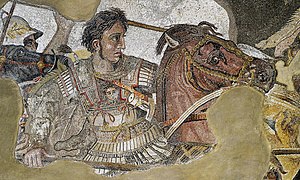
Mosaic from Pompeii depicting Alexander at the Battle of Issus (333 BC). The leopard with four wings symbolizes Alexander's unprecedented speed of conquest—from Greece to India in just 10 years (334-323 BC). The four heads represent his empire's division among exactly four generals after his death at age 32.
.PNG)


HISTORICAL / ARCHAEOLOGICAL CONFIRMATION
- Alexander the Great — Britannica: Complete biography and campaigns
- Battle of Granicus — Livius.org: First major victory over Persians (334 BC)
- Battle of Issus — Britannica: Defeats Darius III (333 BC)
- Battle of Gaugamela — Livius.org: Decisive victory ending Persian Empire (331 BC)
- Death of Alexander — Britannica: Died age 32 in Babylon (323 BC)
- Wars of the Diadochi — World History Encyclopedia: 40-year struggle for succession
- Battle of Ipsus — Britannica: Decisive battle solidifying four-way division (301 BC)
- Ptolemy I, Seleucus I, Cassander, Lysimachus — Britannica: The four Diadochi generals
- Plutarch's Life of Alexander — Perseus Digital Library: Primary source
- Arrian's Anabasis — Perseus Digital Library: Detailed campaign history
- Rosetta Stone — British Museum: From Ptolemaic period (196 BC)
- Porphyry's Critique — Attalus.org: Skeptic argued Daniel written after events (proves prophecy's precision)
- Dead Sea Scrolls Daniel Fragments — Biblical Archaeology: Confirms book's earlier date
FOURTH BEAST: THE TERRIFYING BEAST WITH IRON TEETH
Prophetic Detail
"Great teeth of iron" — Rome's military machine crushed everything. Direct parallel to the iron legs of Daniel 2:33.
"Devoured and brake in pieces, and stamped the residue" — Rome didn't merely conquer — it systematically destroyed cultures, languages, and religions. The destruction of Jerusalem in 70 AD is a prime example.
"Diverse from all the beasts before it" — Rome was qualitatively different: its legal system, military structure, engineering, and governmental reach were unprecedented.
"Ten horns" — A future ten-fold division of Roman territory. See section below.
Key Dates
- 27 BC — Augustus Caesar becomes first Emperor. The Roman Empire formally begins
- 4-6 BC — Jesus Christ born during the reign of Augustus (Luke 2:1)
- 32 AD — Crucifixion under Pontius Pilate, Roman governor of Judea
- 70 AD — Titus destroys Jerusalem and the Temple — fulfilling Daniel 9:26 ("the people of the prince that shall come")
- 135 AD — Bar Kokhba revolt crushed. Jews scattered from Jerusalem
- 313 AD — Edict of Milan (Constantine legalizes Christianity)
- 330 AD — Empire formally divided: Western (Rome) and Eastern (Constantinople) — the two legs of Daniel 2
- 476 AD — Fall of the Western Roman Empire (Romulus Augustulus deposed)
- 1453 AD — Fall of the Eastern (Byzantine) Empire to the Ottoman Turks
Corresponds to Daniel 2
LEGS OF IRON / FEET OF IRON AND CLAY — Two legs = East/West division. Ten toes = ten horns = ten kings of the end times
.JPG/400px-0_Colosseum_-_Rome_111001_(2).JPG)
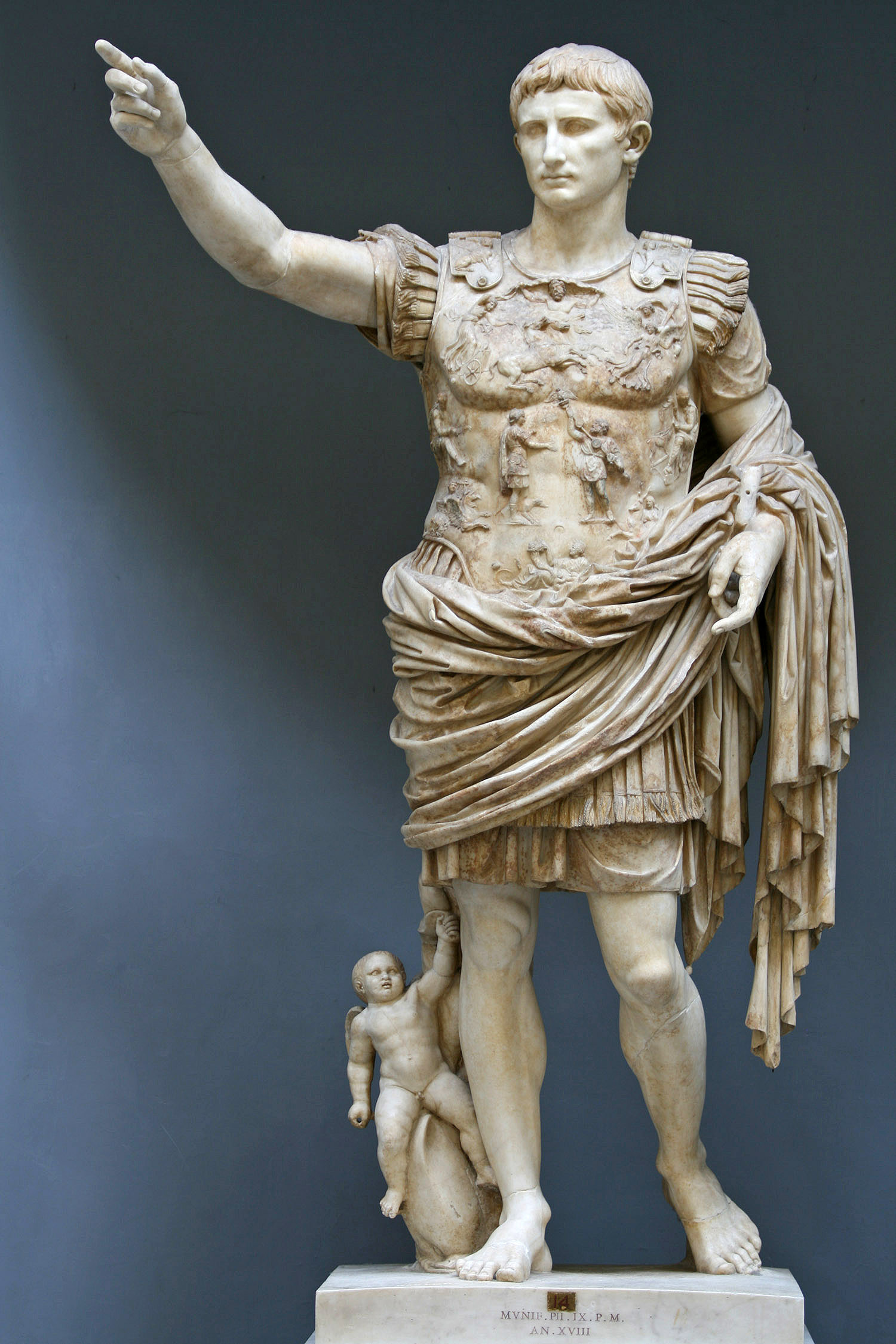
Built 70-80 AD under emperors Vespasian and Titus. This massive amphitheater symbolizes Rome's unprecedented power—the "iron teeth" that devoured and crushed all before it. The fourth beast was "diverse from all" previous empires, and Rome's engineering, military, and legal systems were indeed qualitatively different.


HISTORICAL / ARCHAEOLOGICAL CONFIRMATION
- Augustus Caesar — Britannica: First emperor (27 BC), reigned when Jesus born
- Siege of Jerusalem 70 AD — Britannica: Titus destroys Temple
- Arch of Titus — Smarthistory: Depicts Temple menorah being carried away
- Bar Kokhba Revolt — Britannica: Final Jewish revolt crushed (135 AD)
- Edict of Milan — Britannica: Constantine legalizes Christianity (313 AD)
- Empire Division East/West — Lumen Learning: Two legs of Daniel 2 (330 AD)
- Fall of Western Empire — EBSCO: Romulus Augustulus deposed (476 AD)
- Fall of Constantinople — Britannica: Eastern (Byzantine) Empire falls (1453 AD)
- Josephus on Jerusalem's Destruction — Josephus.org: Eyewitness account of 70 AD
- Roman Historiography — Britannica: Livy, Tacitus, Polybius, Suetonius
- Julius Caesar's Commentaries — Perseus Digital Library: Primary source
DANIEL 2 & 7 — COMPLETE PARALLEL
| Empire | Daniel 2 (Statue) | Daniel 7 (Beasts) | Dates | Status |
|---|---|---|---|---|
| Babylon | Head of Gold | Lion with eagle's wings | 626-539 BC | FULFILLED |
| Medo-Persia | Chest/Arms of Silver | Bear raised on one side | 539-331 BC | FULFILLED |
| Greece | Belly/Thighs of Bronze | Leopard with 4 wings & 4 heads | 331-146 BC | FULFILLED |
| Rome | Legs of Iron | Terrifying beast with iron teeth | 27 BC - 476/1453 AD | FULFILLED |
| Revived Rome | Feet of Iron & Clay / 10 Toes | 10 Horns + Little Horn | FUTURE | PENDING |
| God's Kingdom | The Stone | Ancient of Days + Son of Man | FUTURE | ETERNAL |
THE TEN HORNS — TEN KINGS
Key Characteristics
- > They arise from the fourth kingdom (Rome) — Daniel 7:24
- > They reign simultaneously, not successively — Revelation 17:12
- > They have "one mind" and voluntarily cede authority to the Beast — Revelation 17:13
- > They correspond to the 10 toes of Daniel 2 (iron mixed with clay)
- > Three of them are uprooted by the Little Horn — Daniel 7:8, 24
Modern Significance: The Club of Rome (1973)
On September 17, 1973, the Club of Rome — an organization of scientists, economists, and international civil servants founded in 1968 — released a report titled "Regionalized and Adaptive Model of the Global World System" by Eduard Pestel and Mihajlo Mesarovic (Case Western Reserve University). This became the official second report to the Club of Rome, published as "Mankind at the Turning Point" (1974).
The report proposed dividing the world into ten political/economic regions:
| Region | Territory |
|---|---|
| Region 1 | North America (USA, Canada, Mexico) |
| Region 2 | European Union |
| Region 3 | Japan |
| Region 4 | Australia, New Zealand, South Africa |
| Region 5 | Eastern Europe (including Russia) |
| Region 6 | Central and South America |
| Region 7 | Middle East and North Africa |
| Region 8 | Sub-Saharan Africa |
| Region 9 | Southern and Southeastern Asia |
| Region 10 | China |
PROPHETIC SIGNIFICANCE
An unelected global think tank proposed dividing the world into exactly ten regions — matching the ten horns of Daniel 7 and the ten toes of Daniel 2. Whether this is the specific fulfillment or preparation for it, the infrastructure for a ten-kingdom world government is being deliberately constructed.
The European Union — Revived Roman Empire?
The EU's original six founding nations (1957: France, Germany, Italy, Belgium, Netherlands, Luxembourg) were all part of the historical Roman Empire. The EU represents an unprecedented level of political and economic integration among former Roman territories. Its symbol — the woman riding a bull — is drawn from Greek mythology (the abduction of Europa), but Revelation 17 describes a woman riding a beast representing the final world system.
SECULAR SOURCES
- Mankind at the Turning Point (1974) — Internet Archive: Mihajlo Mesarovic and Eduard Pestel, official second report proposing ten world regions
- The Limits to Growth (1972) — Club of Rome Official: First report to the Club
- Club of Rome History — Official site: Founded by Aurelio Peccei and Alexander King (1968)
- 10 Regions Model — Encyclopedia MDPI: Details on the ten-region world division
THE LITTLE HORN — THE ANTICHRIST
Characteristics of the Little Horn
| Characteristic | Description | Reference |
|---|---|---|
| "Eyes like the eyes of man" | Great human intelligence, perception, cunning | Daniel 7:8 |
| "Mouth speaking great things" | Blasphemous words against God, boastful arrogance | Daniel 7:8, 20, 25 |
| "Three horns plucked up" | Uproots/subdues three of the ten kings to gain power | Daniel 7:8, 24 |
| "Speaks against the Most High" | Blasphemes God directly | Daniel 7:25 |
| "Wears out the saints" | Systematic persecution of God's people | Daniel 7:25 |
| "Changes times and laws" | Alters appointed seasons, festivals, and divine/natural law | Daniel 7:25 |
| "Time, times, half a time" | Rules for 3.5 years (1 + 2 + ½ = 3.5) | Daniel 7:25 |
| "More stout than his fellows" | Grows greater than the other kings | Daniel 7:20 |
| "Made war with the saints" | Actively wages war against believers | Daniel 7:21 |
The 3.5 Year Reign
"TIME, TIMES, AND HALF A TIME"
This same period appears throughout Scripture in different forms — all equal:
- > 3.5 years — Daniel 7:25, 12:7; Revelation 12:14
- > 42 months — Revelation 11:2, 13:5
- > 1,260 days — Revelation 11:3, 12:6
This is the second half of Daniel's 70th Week — the Great Tribulation period when the Antichrist breaks his covenant with Israel and demands worldwide worship.
Connection to Revelation 13
The Beast of Revelation 13 shares every characteristic of Daniel 7's Little Horn — same blasphemy, same war on the saints, same 42-month reign, same global authority. They are the same figure: the Antichrist.
THE ANCIENT OF DAYS — THE HEAVENLY COURT

The Judgment Scene
- > Thrones set in place — A divine court convenes. The plural "thrones" (כָּרְסָוָן — korsawan) indicates a heavenly council
- > White garments and hair — Purity, holiness, and wisdom beyond all ages
- > Throne of fire — Divine judgment and consuming holiness (cf. Hebrews 12:29)
- > "Thousand thousands... ten thousand times ten thousand" (רִבּוֹ רִבְבָן — ribbo ribbvan) — Innumerable heavenly host attending God
- > "The books were opened" — Divine record of all deeds (cf. Revelation 20:12)
The Little Horn's blasphemous words draw God's final judgment. The beast (the entire world system) is destroyed — matching the Stone striking the statue in Daniel 2:34-35 and the Beast being thrown into the lake of fire in Revelation 19:20.
THE SON OF MAN — THE COMING KING
What He Receives
- ✓ Dominion — Sovereign authority over all creation
- ✓ Glory — The radiance and honor due to God alone
- ✓ A Kingdom — All peoples, nations, and languages serve Him
- ✓ Everlasting dominion — It will never pass away
- ✓ Indestructible kingdom — It will never be destroyed

Jesus Claims to Be the Son of Man
Jesus used "Son of Man" as His preferred self-designation — over 80 times in the Gospels. At His trial before the Sanhedrin, He made the connection unmistakable:
Jesus directly quoted Daniel 7:13 at the trial that led to His crucifixion. The high priest understood exactly what He was claiming — to be the divine Son of Man who receives the eternal kingdom from the Ancient of Days. The high priest tore his robes and declared it blasphemy (Mark 14:63-64) — because Jesus was claiming to be God in human form.
BIBLICAL CROSS-REFERENCES & SCHOLARLY SOURCES
- Daniel 7:13 Cross-References — ESV.org: Shows Jesus quoting Daniel at His trial (Mark 14:61-62, Matthew 26:64)
- Revelation 13 Commentary — Bible Insight: Beast parallels to Little Horn (42 months, war on saints, blasphemy)
- Revelation 17:12-13 Ten Kings — The Forerunner: Ten horns giving power to the Beast
THE PROPHETIC FULFILLMENT
At His first coming, Jesus came as the suffering servant (Isaiah 53), was "cut off" (Daniel 9:26), and was rejected by Israel.
At His second coming, He returns as Daniel 7's Son of Man — with the clouds of heaven — to destroy the Beast, judge the nations, and establish His eternal kingdom.
"Behold, he cometh with clouds; and every eye shall see him..." — Revelation 1:7
THE SAINTS OF THE MOST HIGH
The pattern is clear: the Little Horn makes war against the saints and prevails — until God intervenes. Then the kingdom is given to the saints forever. Persecution is temporary; the kingdom is eternal.
PROPHETIC CONNECTIONS
DANIEL 2 — THE STATUE
The same four kingdoms seen as metals — man's perspective of world power
DANIEL 9 — 70 WEEKS
The mathematical timeline — when the Son of Man was "cut off" and when He returns
TOWER OF BABEL
The spirit of rebellion that drives every beast empire — from Nimrod to the Antichrist
BEAST SYSTEM EVIDENCE
Modern infrastructure being built for the fourth beast's final form — the ten horns and little horn
THE COMPLETE PICTURE
- Daniel 2 shows the empires as metals — ending with the Stone (Christ's Kingdom) smashing them all
- Daniel 7 shows the empires as beasts — ending with the Ancient of Days judging them and the Son of Man receiving the kingdom
- Daniel 9 provides the exact timeline — 69 weeks to Messiah's first coming, the 70th week for the Antichrist's reign
- Daniel 11-12 provides detailed history of the Greek kingdoms and the final Antichrist (to be studied next)
- Revelation 13, 17 expands on the fourth beast — the ten horns, the little horn, the 42-month reign, the mark of the beast
- Revelation 19 shows the Son of Man returning — the beast destroyed, the kingdom established forever
DANIEL IN ART & ARCHAEOLOGY


CONCLUSION
Daniel 7's vision has been confirmed with extraordinary precision by over 2,500 years of recorded history:
- ✓ Babylon fell to Medo-Persia (539 BC) — confirmed by the Cyrus Cylinder, Herodotus, Xenophon
- ✓ Medo-Persia fell to Greece (331 BC) — confirmed by Arrian, Plutarch, archaeological evidence at Persepolis
- ✓ Greece divided into exactly four kingdoms — confirmed by multiple ancient historians and Hellenistic coins/inscriptions
- ✓ Rome crushed all before it with "iron teeth" — confirmed by Livy, Tacitus, Josephus, the Arch of Titus
- ✓ Jesus claimed to be the Son of Man of Daniel 7 — confirmed by the Gospel accounts of His trial
What remains is the final phase: the ten horns, the little horn, and the return of the Son of Man to establish His eternal kingdom.
The beasts are stirring. The infrastructure for ten-region global governance is being built. The stage is being set.